
What Every Affordable Housing Owner Must Know About CapEx vs. Repairs
Every year, thousands of multifamily property owners unknowingly trigger IRS audits by misclassifying capital expenditures as repairs. The cost? Penalties averaging $15,000–$25,000, plus back taxes, interest, and mountains of stress.
If you’ve ever wondered whether that $8,000 HVAC replacement should be deducted immediately or depreciated over 27.5 years, this newsletter is for you.
The Problem: Gray Zones Cost You Money
The IRS distinguishes between:
- Repairs (deductible immediately): Fixes that restore property to ordinary operating condition
- Capital Expenditures (depreciated over 27.5 years): Improvements that better, adapt, or restore property beyond its original state
But what about a $12,000 roof repair? A $7,500 flooring replacement during unit turnover? These gray-zone expenses trip up even experienced operators.
Real-World Scenario: The $8,000 Unit Turn
After a Section 8 tenant moves out, you spend:
- $1,800 – Paint and patch walls
- $2,200 – Replace worn carpet
- $1,500 – New countertops (upgrade from laminate to quartz)
- $1,200 – HVAC repair (compressor replacement)
- $1,300 – Plumbing fixes and bathroom caulking
The Question: What’s a repair vs. CapEx?
Conservative Approach:
- Repairs (deduct now): Paint ($1,800), HVAC repair ($1,200), plumbing ($1,300) = $4,300
- CapEx (depreciate): Carpet ($2,200), countertops ($1,500) = $3,700
Aggressive Approach (Higher Audit Risk):
- Deduct everything as “repairs” = $8,000 immediate deduction
The Risk: If audited, the IRS may reclassify $3,700+ as CapEx, triggering penalties of 20%–40% of the underpayment, plus interest.
The Safe Harbor Rules That Protect You
The IRS offers three safe harbor elections that reduce audit risk:
1. De Minimis Safe Harbor
- Deduct items under $2,500 per invoice (or $5,000 with applicable financial statements)
- Must elect annually on your tax return
2. Routine Maintenance Safe Harbor
- Deduct repairs/maintenance that keep property in ordinary condition
- Must occur at least twice during the property’s lifespan
3. Small Taxpayer Safe Harbor (New for 2024+)
- If average annual gross receipts ≤ $10M, deduct the lesser of:
- $10,000, or
- 2% of the property’s unadjusted basis
Action: File these elections with your tax return every year to maximize protection.
Four Questions Before You Book an Expense
Before categorizing any expense, ask:
- Does it fix a problem or upgrade/improve?
Fix = repair | Upgrade = CapEx - Does it extend useful life beyond original expectation?
Restores = repair | Materially extends = CapEx - Is it part of a larger plan or project?
Isolated = repair | Multi-phase project = CapEx - How does cost compare to asset value?
Small relative = repair | Large relative = CapEx (higher IRS scrutiny)
Audit Red Flags to Avoid
- Deducting large “repairs” in the acquisition year (IRS assumes you’re capitalizing pre-purchase improvements)
- Consistently treating gray-zone items as 100% repairs without documentation
- Zero CapEx for older properties over multiple years (signals underinvestment or misclassification)
Action Steps This Week
✅ Review last year’s Schedule E – Verify repair vs. CapEx allocations
✅ Discuss safe harbor elections with your CPA – File them with your next return
✅ Create an expense categorization checklist – Align with your property manager/bookkeeper
✅ Document major expenses – Scope, before photos, business rationale before approval
Looking to Exit Your Portfolio?
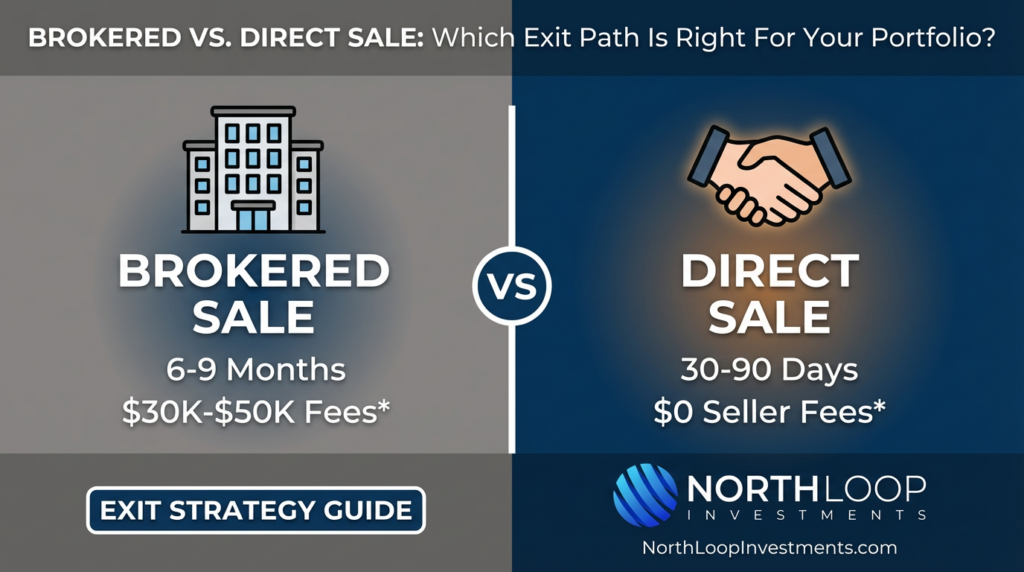
If you own multifamily apartment buildings or HUD Senior/Family Housing and are exploring an exit or partnership, we provide all-cash offers with no broker commissions paid by the seller* and closing dates that work around your schedule.
Visit NorthLoopInvestments.com or send me a message to start a confidential conversation.
Disclaimer: This newsletter is provided for informational and educational purposes only and does not constitute legal, tax, or financial advice. Consult with a qualified CPA or tax attorney regarding your specific situation. *Broker commissions may apply in Illinois where a principal is a licensed real estate broker.
#affordablehousing #section8housing #HUDproperties #HAPcontracts #multifamilyinvestors